Creamy and Cozy Pasta Carbonara Made the Authentic Way
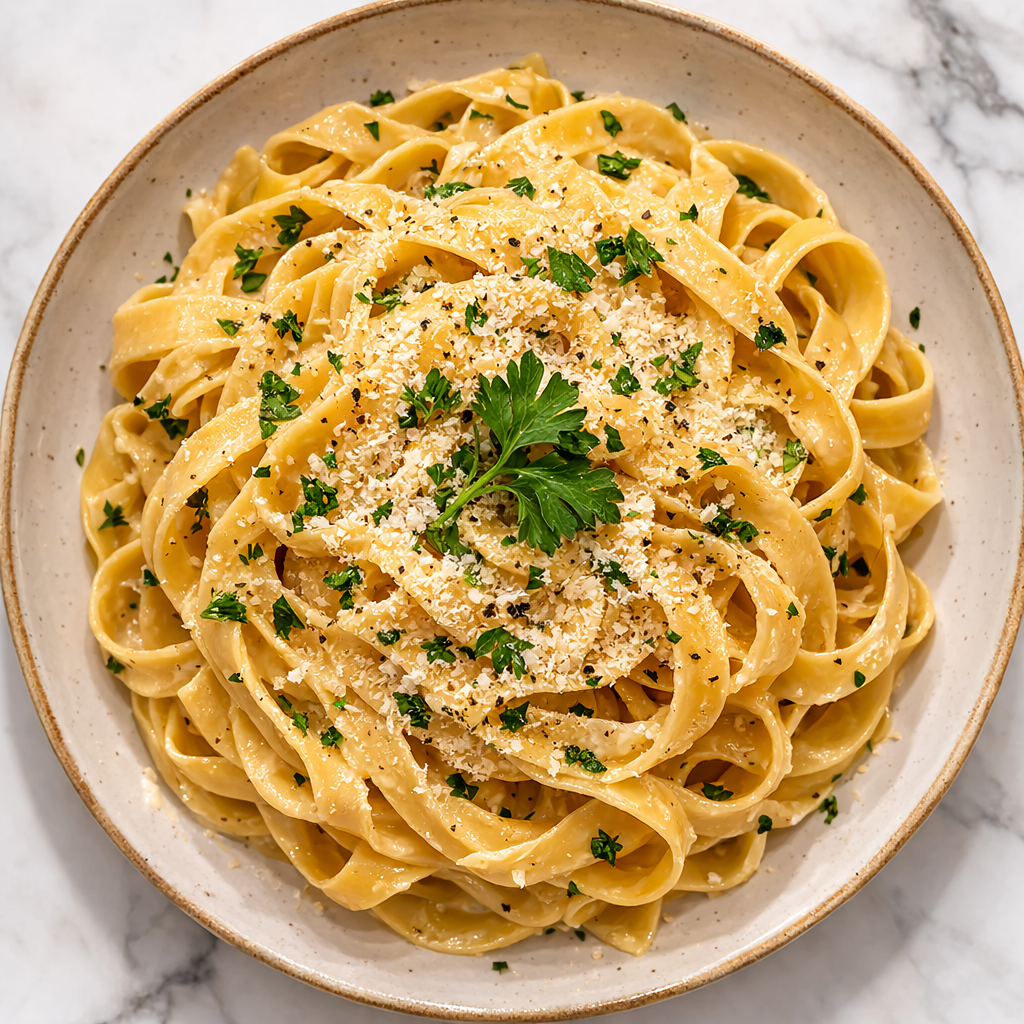
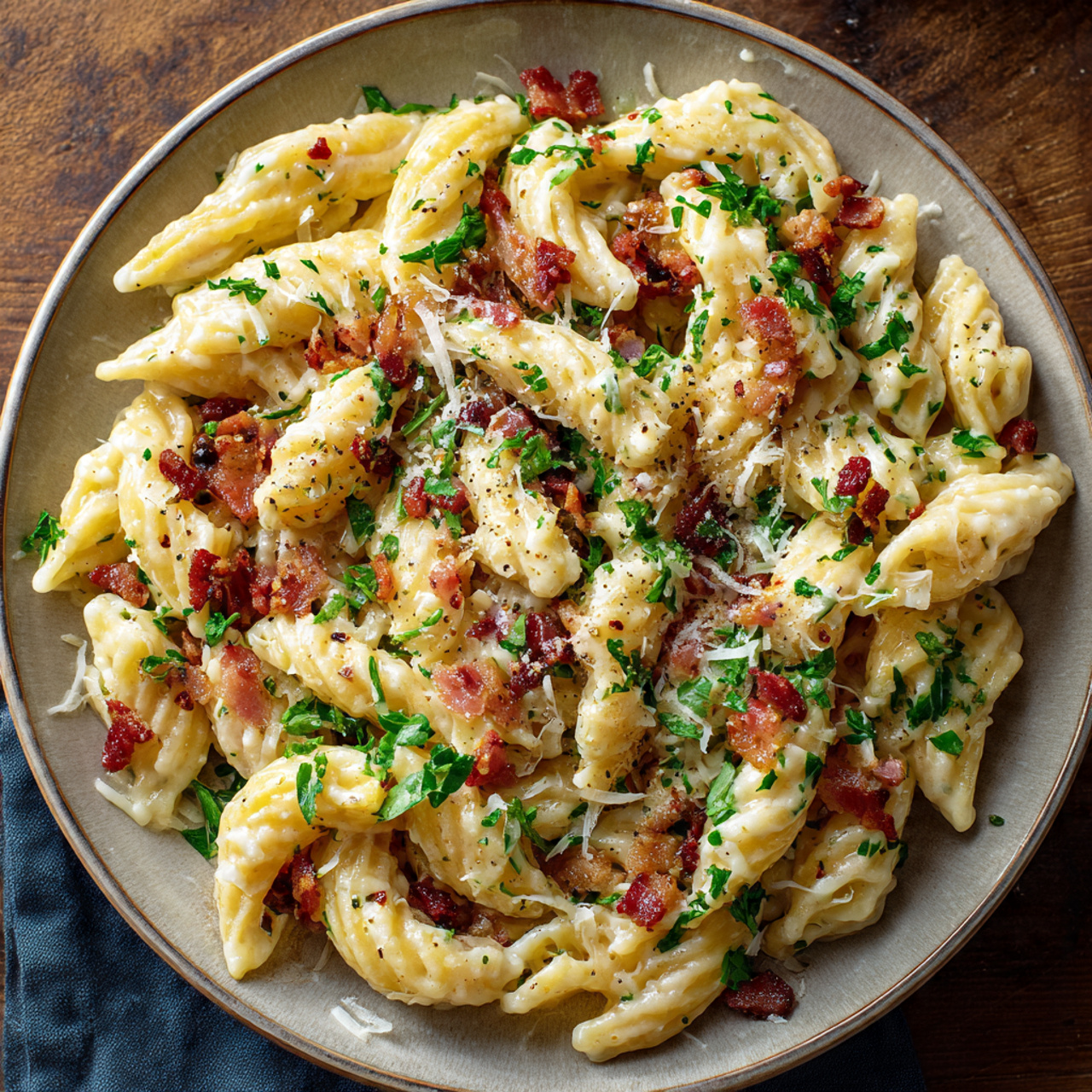
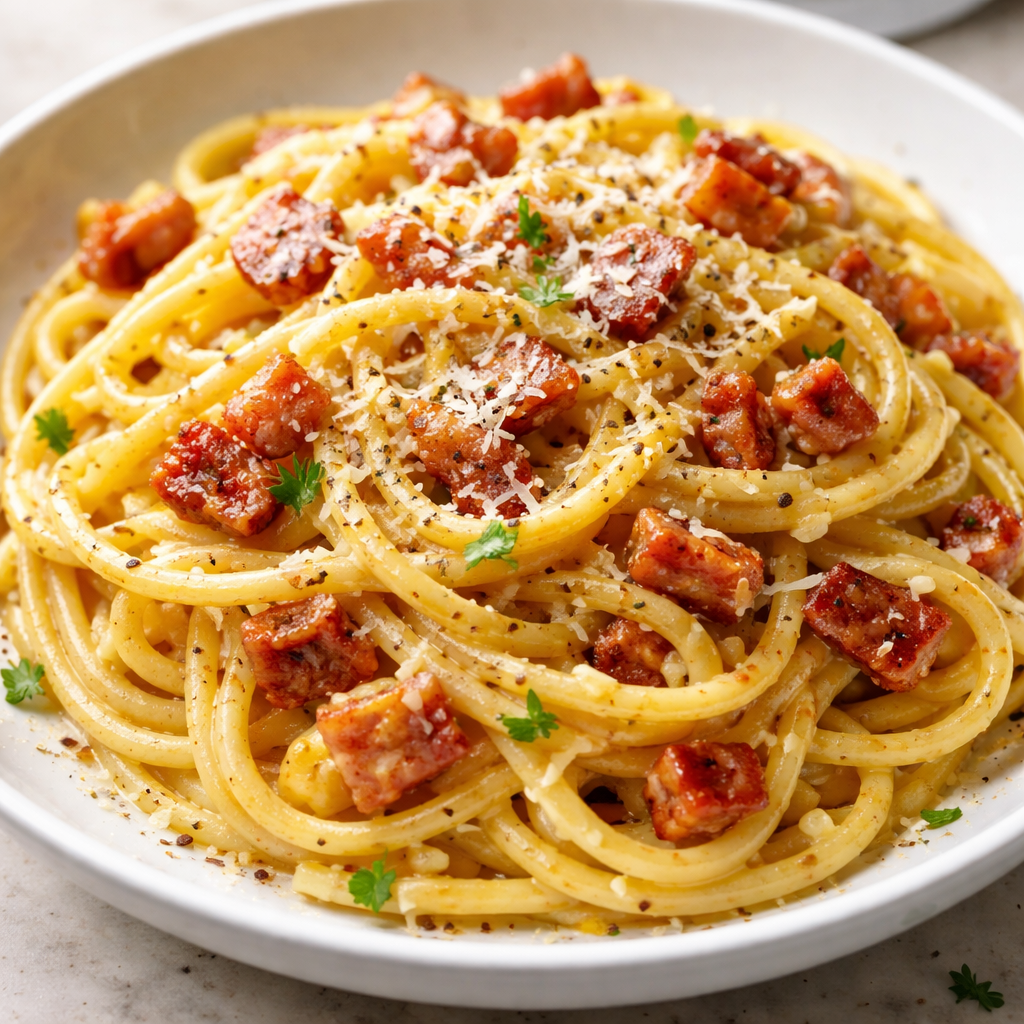
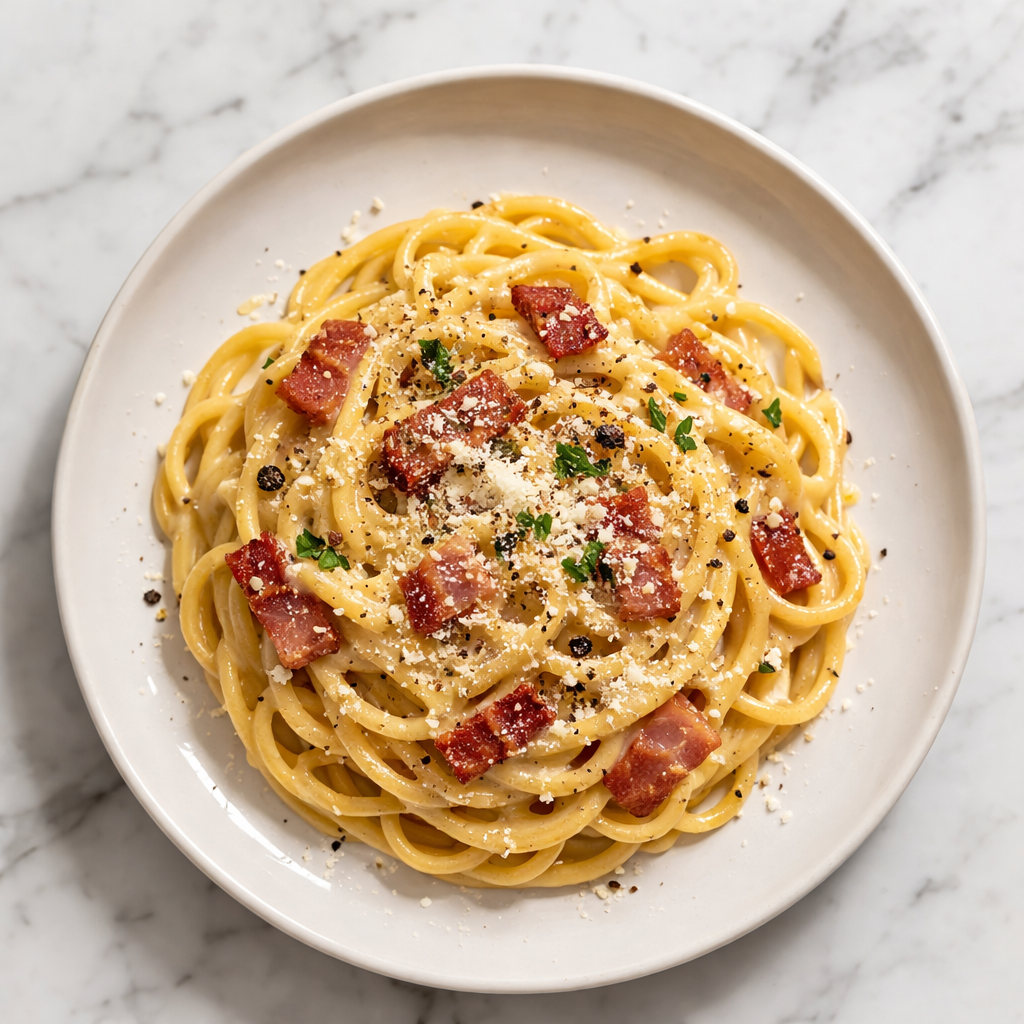
There’s something incredibly comforting about a warm bowl of pasta carbonara. The silky sauce clings gently to every strand of pasta, creating a rich, creamy bite that feels indulgent yet beautifully simple. The aroma of sizzling pancetta, freshly cracked black pepper, and nutty Parmesan fills the kitchen, making it nearly impossible to wait for the first forkful.
This classic Italian pasta dish is beloved for its smooth texture, savory depth, and satisfying richness. Whether you’re preparing a quick weeknight dinner, hosting a cozy brunch, or bringing a crowd-pleasing dish to a potluck gathering, pasta carbonara always delivers comforting flavor with very little effort.
The balance of tender pasta, creamy egg sauce, salty pancetta, and sharp cheese creates a dish that feels both elegant and homey. It’s the kind of meal that turns simple ingredients into something memorable—perfect for holidays, family dinners, or those evenings when you want something warm and satisfying.
Why You’ll Love This Recipe
Rich Yet Balanced Flavor
The combination of eggs, cheese, and pancetta creates a deeply savory sauce that tastes luxurious without feeling heavy. Black pepper adds gentle warmth that balances the creamy richness beautifully.
Silky, Creamy Texture
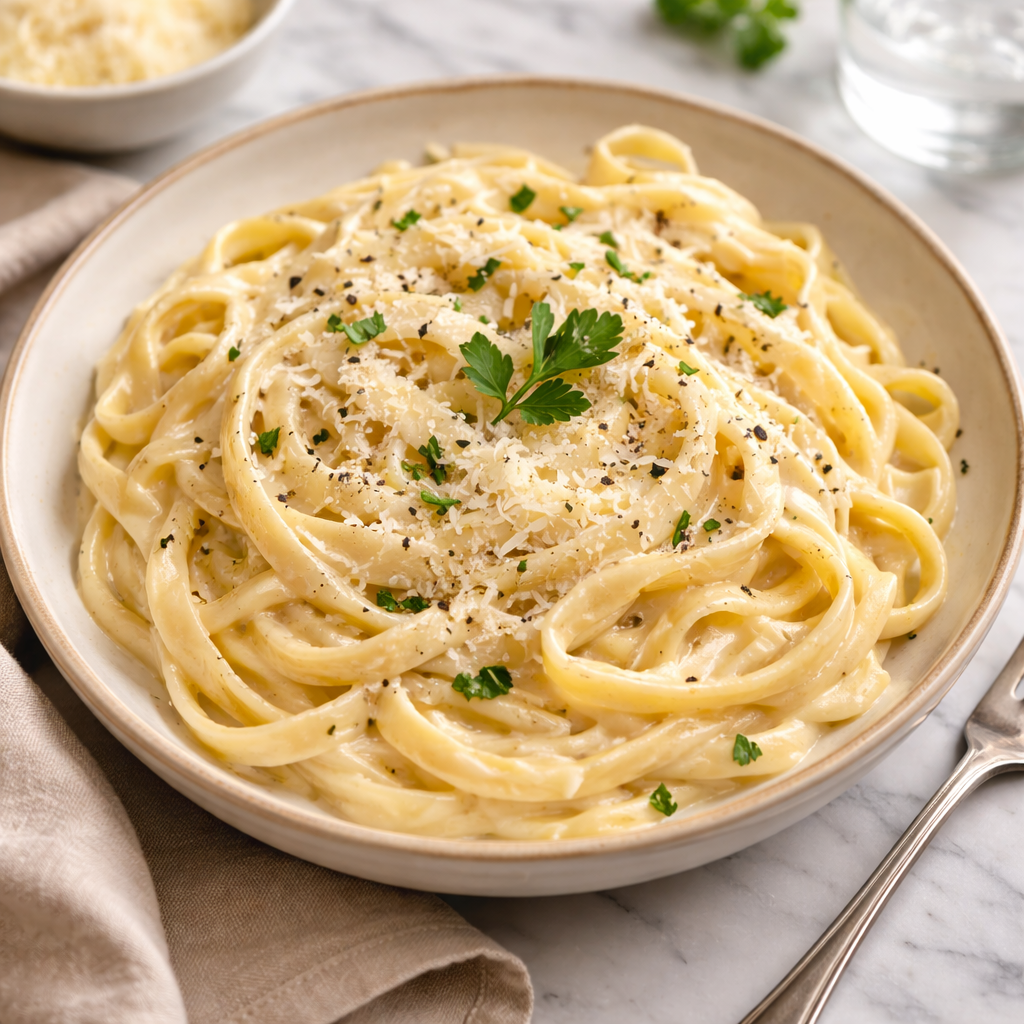
When the hot pasta meets the egg and cheese mixture, the sauce transforms into a velvety coating that clings perfectly to each noodle. The result is smooth, glossy pasta with a comforting bite.
Quick and Easy to Make
Pasta carbonara comes together surprisingly fast with only a handful of ingredients. Even beginner cooks can create a restaurant-quality dish in under 30 minutes.
Perfect for Family Meals and Potlucks
This cozy pasta dish is satisfying and universally loved. It’s hearty enough for gatherings yet simple enough for a relaxed weeknight dinner.
Classic Italian Dish with a Cozy Twist
While rooted in tradition, this version highlights extra creaminess and warmth that makes it especially comforting for modern home cooking.
Ingredients
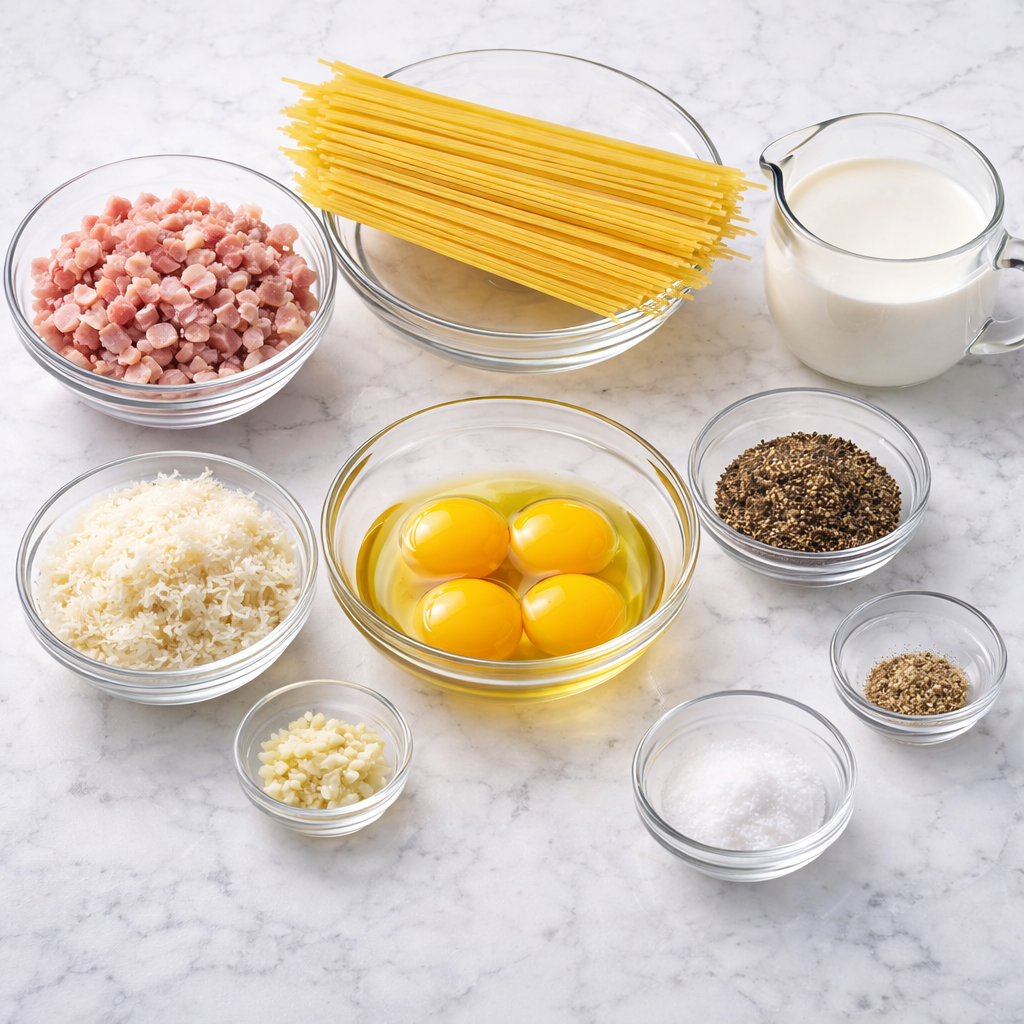
For the Pasta Base
- 12 oz spaghetti
- 1 tablespoon salt (for boiling pasta water)
For the Carbonara Sauce
- 3 large eggs
- 1 large egg yolk
- 1 cup freshly grated Parmesan cheese
- ½ cup freshly grated Pecorino Romano cheese
- 1 teaspoon freshly cracked black pepper
For the Flavor Base
- 6 oz pancetta or guanciale, diced
- 2 cloves garlic, lightly crushed (optional)
- 1 tablespoon olive oil
For Garnish
- Extra grated Parmesan cheese
- Fresh parsley, chopped (optional)
- Additional cracked black pepper
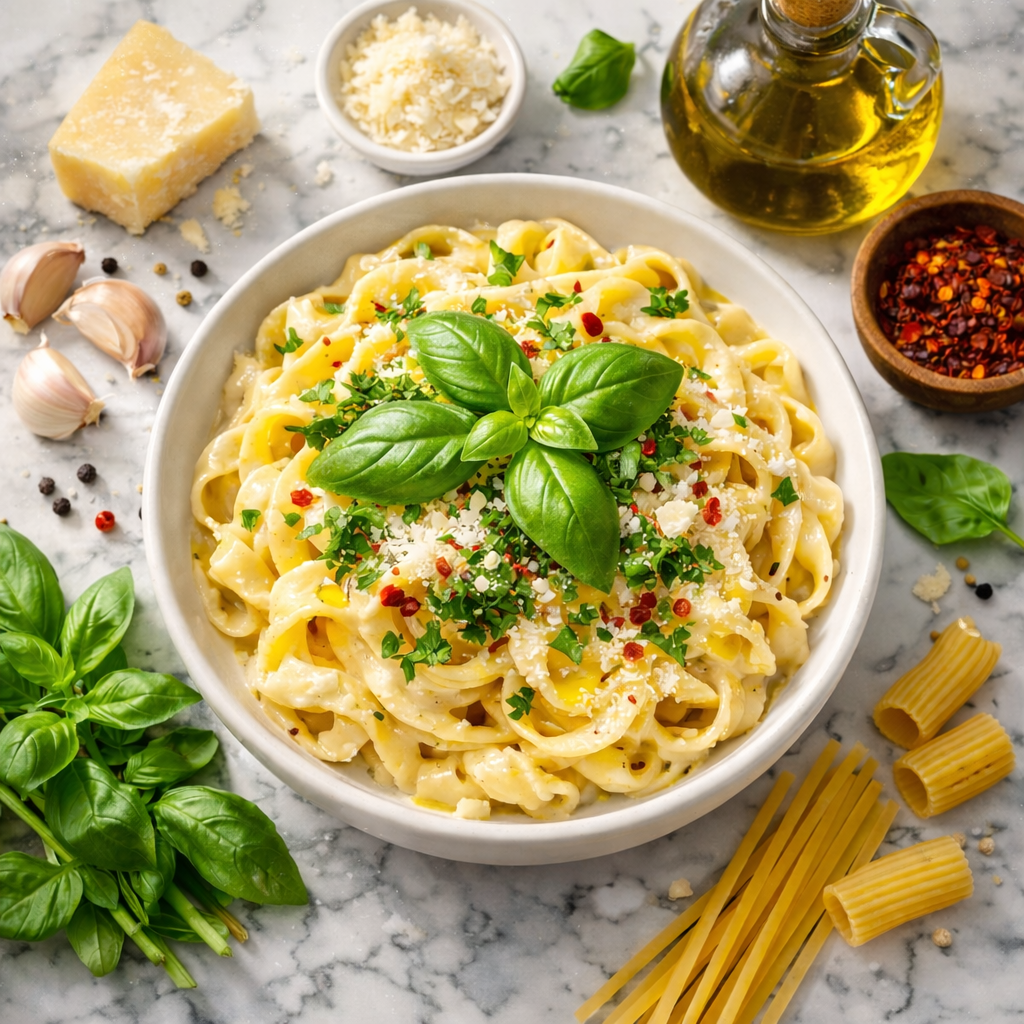
These simple ingredients come together to create a beautifully creamy, savory sauce where salty pancetta, nutty cheese, and silky eggs combine for the signature carbonara flavor.
How to Make (Step-by-Step)
Step 1: Cook the Pasta
Bring a large pot of salted water to a boil and cook the spaghetti until al dente. The pasta should be tender but still have a slight bite. Reserve about 1 cup of pasta water before draining.
Step 2: Crisp the Pancetta
In a large skillet over medium heat, cook the diced pancetta with olive oil. Stir occasionally until the edges turn golden and slightly crispy and the fat renders out.
Step 3: Prepare the Creamy Egg Mixture
In a bowl, whisk together the eggs, egg yolk, grated Parmesan, Pecorino Romano, and black pepper. The mixture should look thick, smooth, and creamy.
Step 4: Combine Pasta and Pancetta
Add the hot drained pasta directly into the skillet with the pancetta. Toss gently so the pasta absorbs the flavorful rendered fat.
Step 5: Create the Carbonara Sauce
Remove the skillet from heat. Slowly pour the egg and cheese mixture over the hot pasta while tossing continuously. The residual heat will transform it into a silky sauce. Add small splashes of reserved pasta water until the sauce looks glossy and coats the pasta evenly.
Step 6: Finish and Serve
Let the pasta rest for about a minute so the sauce thickens slightly. Serve immediately with extra Parmesan, parsley, and freshly cracked black pepper.
Perfecting This Recipe
The secret to perfect pasta carbonara is controlling the heat. The eggs should create a creamy sauce, not scramble, so always remove the pan from direct heat before adding the egg mixture.
Using freshly grated cheese improves both texture and flavor. Pre-shredded cheese doesn’t melt as smoothly and can create a grainy sauce.
Toss the pasta quickly after adding the eggs. The heat from the pasta gently cooks the sauce while keeping it silky and smooth.
If the sauce feels too thick, add a small splash of pasta water. The starchy water helps emulsify the sauce and create that classic glossy finish.
Allow the pasta to rest briefly before serving. This helps the sauce settle and cling perfectly to the noodles.
Add Your Touch
You can easily customize pasta carbonara to suit your taste.
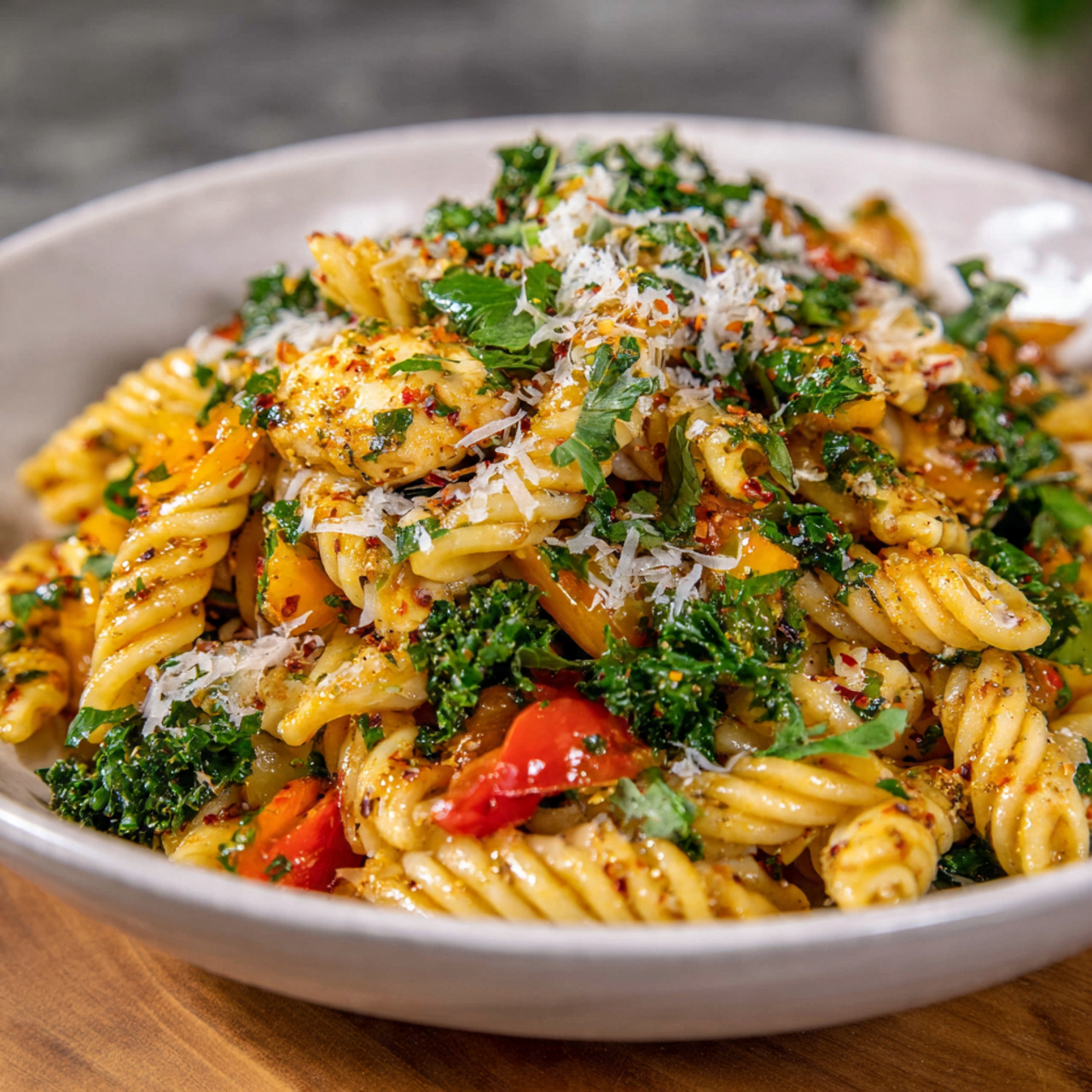
- Add sautéed mushrooms for earthy flavor.
- Stir in peas for a touch of sweetness and color.
- Swap pancetta for crispy bacon if that’s what you have on hand.
- Use fettuccine or rigatoni instead of spaghetti.
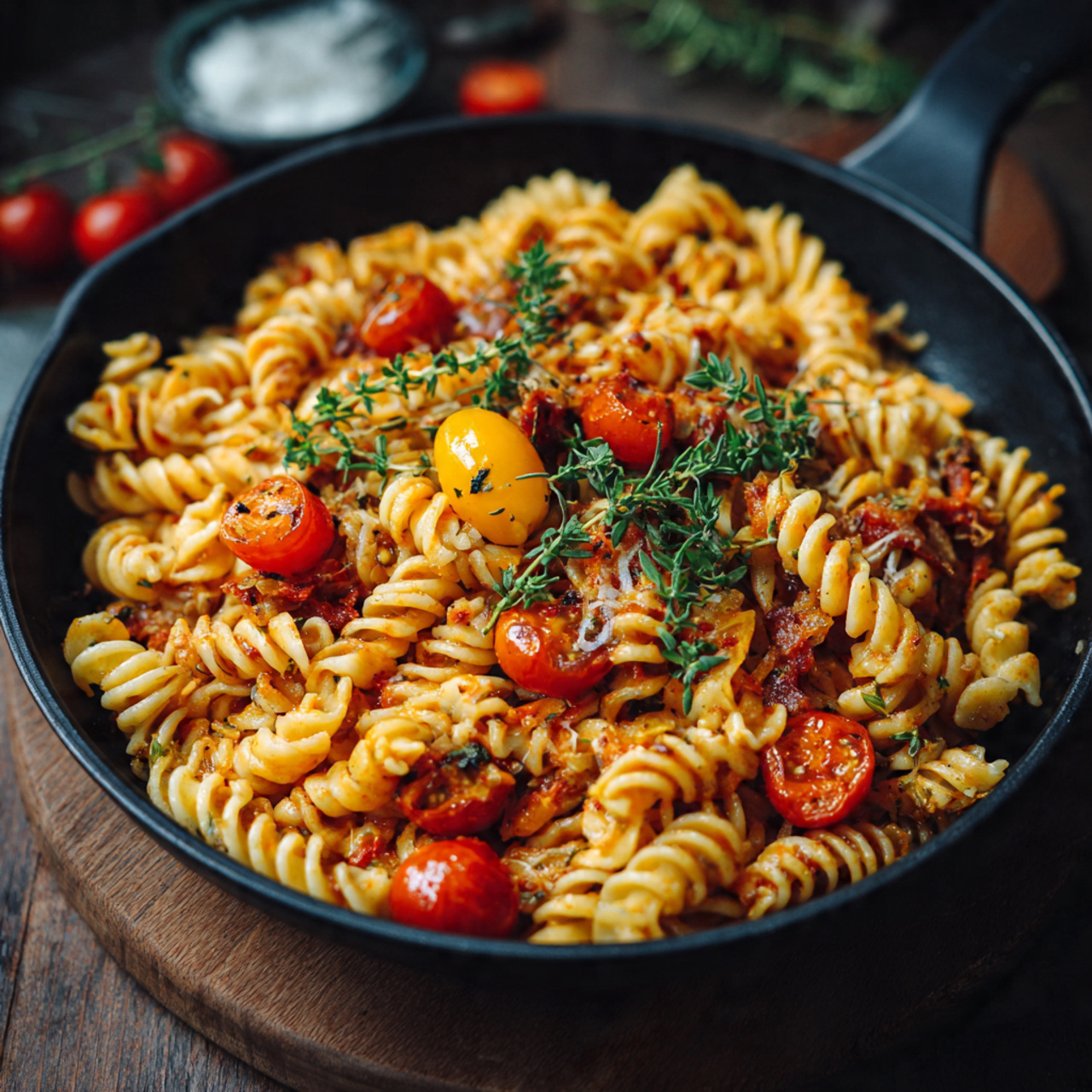
- Add a pinch of chili flakes for gentle heat.
These small twists make the recipe fun while keeping its comforting character.
Storing and Serving
Fridge
Store leftover pasta carbonara in an airtight container for up to 3 days. The sauce may thicken slightly as it chills.
Freezer
Freezing is not recommended because the egg-based sauce can separate and lose its creamy texture.
Reheating
Reheat gently on the stovetop with a splash of water or milk while stirring slowly to restore the creamy consistency.
Make-Ahead Tip
Prepare the pancetta and cheese mixture in advance. When ready to cook, simply boil the pasta and combine everything fresh.
Servings
This recipe makes about 4 generous servings.
Nutrition (Approximate Per Serving)
- Calories: 520
- Fat: 26g
- Saturated Fat: 11g
- Carbohydrates: 48g
- Sugar: 2g
- Protein: 24g
- Sodium: 780mg
Chef’s Helpful Tips
Use room temperature eggs so they blend smoothly into the sauce.
Avoid overheating the pan after adding the egg mixture. Too much heat can scramble the eggs.
Freshly grated cheese melts better and gives the sauce a smoother texture.
Taste before adding salt because pancetta and cheese already add plenty of savory flavor.
If the sauce becomes too thick, simply add a spoonful of pasta water and toss again.
Frequently Asked Questions
Q1. Can I substitute bacon for pancetta?
Yes. Bacon works well and adds a smoky flavor that pairs nicely with the creamy sauce.
Q2. Is pasta carbonara beginner friendly?
Absolutely. The recipe uses simple ingredients and comes together quickly with just a few steps.
Q3. Does carbonara use cream?
Traditional carbonara does not use cream. The creamy texture comes from eggs, cheese, and pasta water.
Q4. Is this recipe good for potlucks?
Yes. It’s hearty, comforting, and loved by most guests. Just serve it warm for the best texture.
Q5. Can pasta carbonara be frozen?
Freezing isn’t recommended because the egg sauce can separate after thawing.
Conclusion
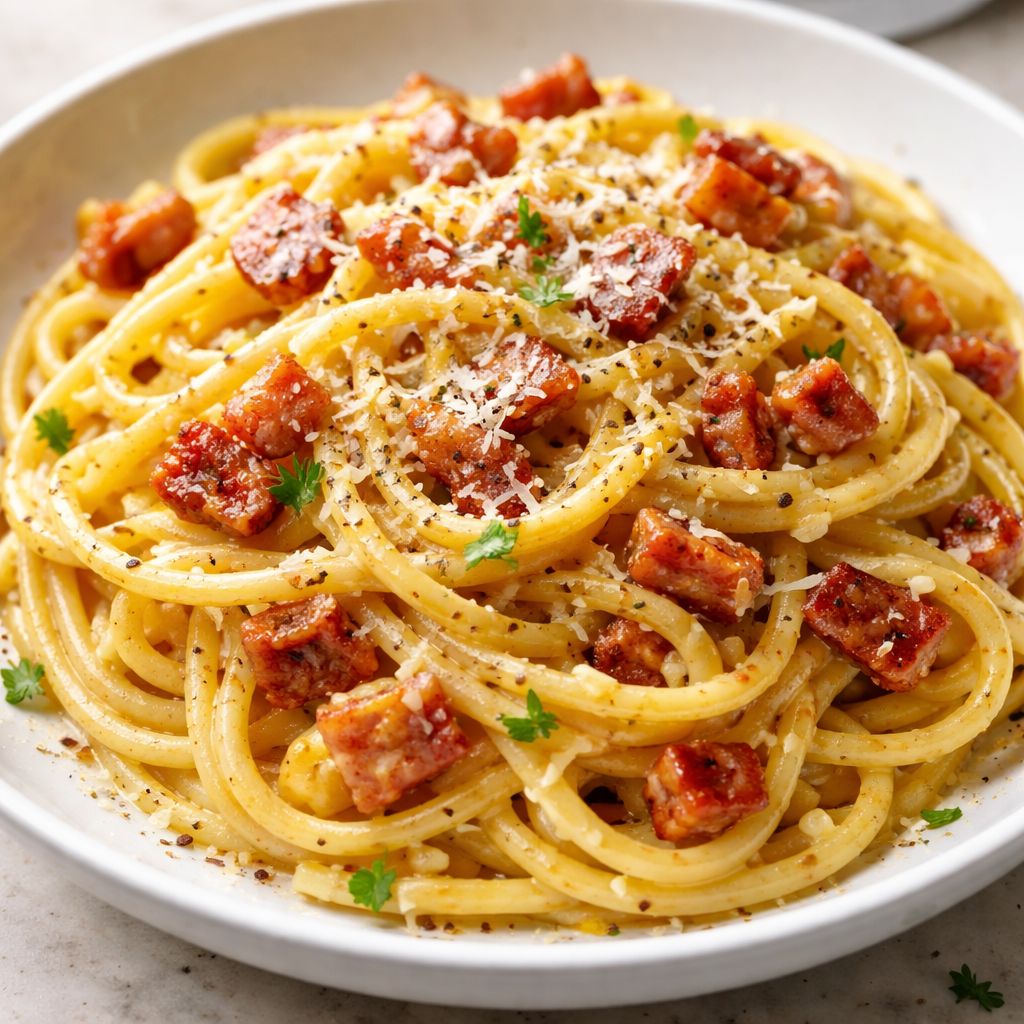
Pasta carbonara is one of those timeless dishes that proves simple ingredients can create something truly special. The creamy sauce, savory pancetta, and tender pasta come together in a way that feels both comforting and elegant at the same time.
Whether you’re making it for a busy weeknight dinner, a cozy gathering, or a relaxing weekend meal, pasta carbonara always delivers warmth and flavor in every bite. Once you try this homemade version, it might just become your favorite go-to pasta recipe.
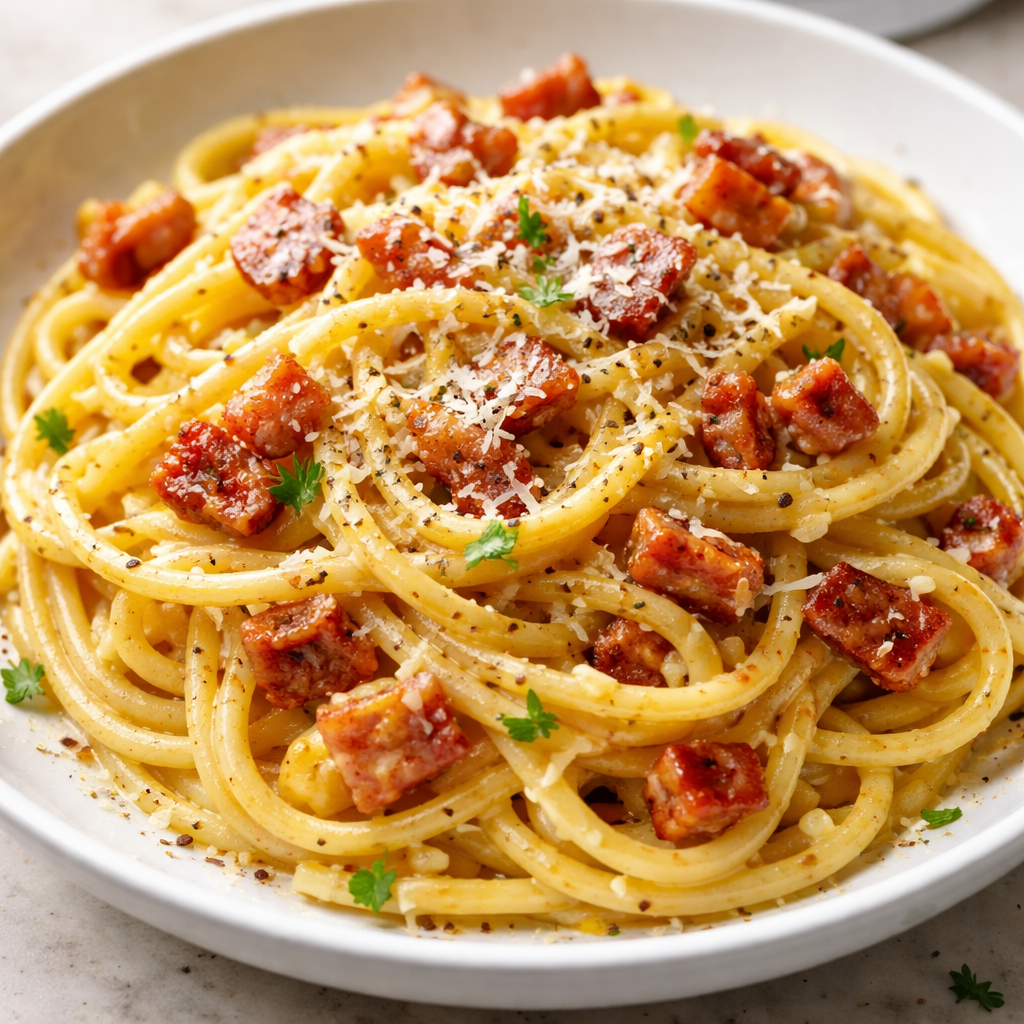
Classic Creamy Pasta Carbonara
Ingredients
Method
- Bring salted water to a boil and cook spaghetti until al dente. Reserve 1 cup pasta water.
- Cook pancetta in olive oil until crispy and golden.
- Whisk eggs, egg yolk, Parmesan, Pecorino, and black pepper in a bowl.
- Toss hot pasta with pancetta in the skillet.
- Remove from heat and mix in the egg mixture while tossing quickly.
- Add pasta water gradually until the sauce becomes silky and creamy.
- Serve immediately with extra cheese and black pepper.
Notes
- Use freshly grated cheese for smoother sauce.
- Add pasta water slowly to control sauce texture.
- Avoid direct heat after adding eggs.
- Best enjoyed immediately after cooking.